Why Wellness Websites Get Visitors but Few Booked Clients
Someone finally decides to reach out for therapy or wellness support at 10 PM. They search on their phone, tap your link, and read your bio. They click "Book Now" and hit a twenty-question medical history form before they even know if you have an opening next week. Feeling overwhelmed, they close the tab and book with the next practice that answers in three simple steps.
If you run a therapy practice, counseling studio, or holistic wellness clinic, you already know how much trust it takes for a person to reach out. When your site gets steady traffic but your calendar stays half full, the problem is rarely your clinical care. It is the gap between someone visiting your page and feeling safe enough to book.
As we explored in why a website is not generating leads, most solo and small-clinic sites lose high-intent visitors to slow templates, silent pages, and heavy intake friction.
Why Half of Wellness Inquiries Never Become Booked Clients
For health and wellness practitioners, reaching out is personal. Prospective clients compare options quietly, and they do not wait around if the first step feels cold or confusing.
Inquiry Drop-Off Benchmark: Therapy paid search conversion sits around 1.85% compared to 15.35% for physical therapy, and 50% to 60% of wellness inquiries never turn into a booked appointment [1].
That drop-off rarely happens because people changed their minds about getting help. It happens because they hit a silent contact form, get no clear timeline for a reply, and move on to the first practice that makes them feel heard.
First-Responder Advantage: Roughly 80% of clients book with the first practitioner who responds, yet many clinics take 6 to 24 hours to reply to a web form [1].
Your first impression happens in the ten seconds between a visitor clicking your button and getting a clear next step.
Simple Intake replaces slow contact forms with a calm three-step fit check that routes clients straight into your calendar.
Why EHR Website Add-Ons Keep Your Practice Invisible
Many therapists and wellness coaches rely on the single-page website included with their EHR software, such as SimplePractice or Jane. Those tools are great for clinical notes, telehealth, and billing, yet their built-in website builders usually offer one page, three rigid templates, and almost no search controls [3].
That matters because client discovery has shifted. People are no longer just scrolling long directory lists; they are asking AI tools directly for local care recommendations.
AI Health Search Volume: Over 40 million people ask ChatGPT health questions every day, and AI tools synthesize one clear answer instead of showing a long directory list [2].
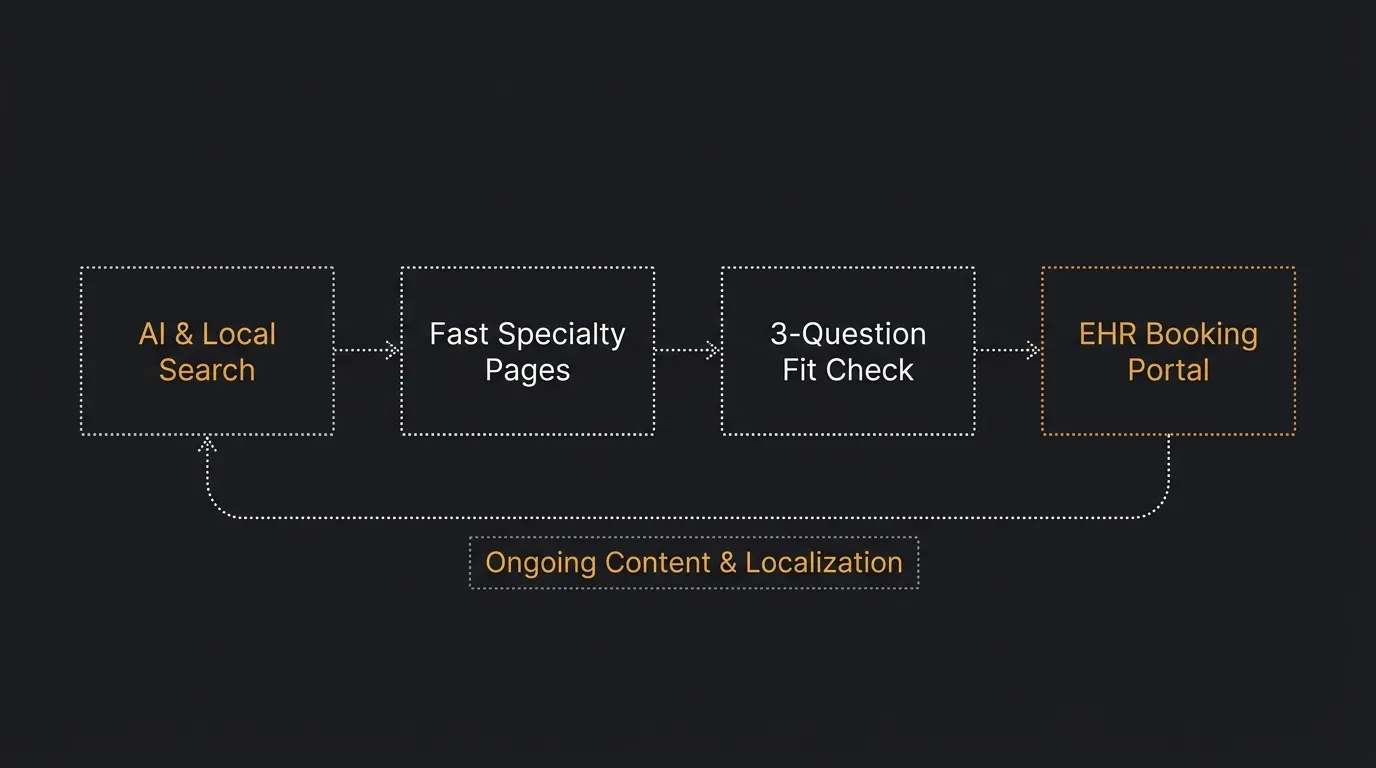
A single-page EHR add-on has no blog, no dedicated specialty pages, and no way to answer the exact questions a client types before reaching out [3]. Keeping your clinical EHR for private charting while running a fast, multi-page public website lets both Google and AI assistants verify your credentials and specialty focus [2][3].
AI Citation Share: Dedicated practice websites with structured schema, clean sitemaps, and open AI crawler access account for 57% of ChatGPT citations and 72% of Perplexity citations in therapy searches [3].
How to Keep Your Practice Site Alive Without Doing Tech Work
You became a practitioner to work with clients, not to debug plugins or write meta tags every Sunday. Yet static websites that sit untouched for a year quietly drop out of AI citation pools and local search results [2].
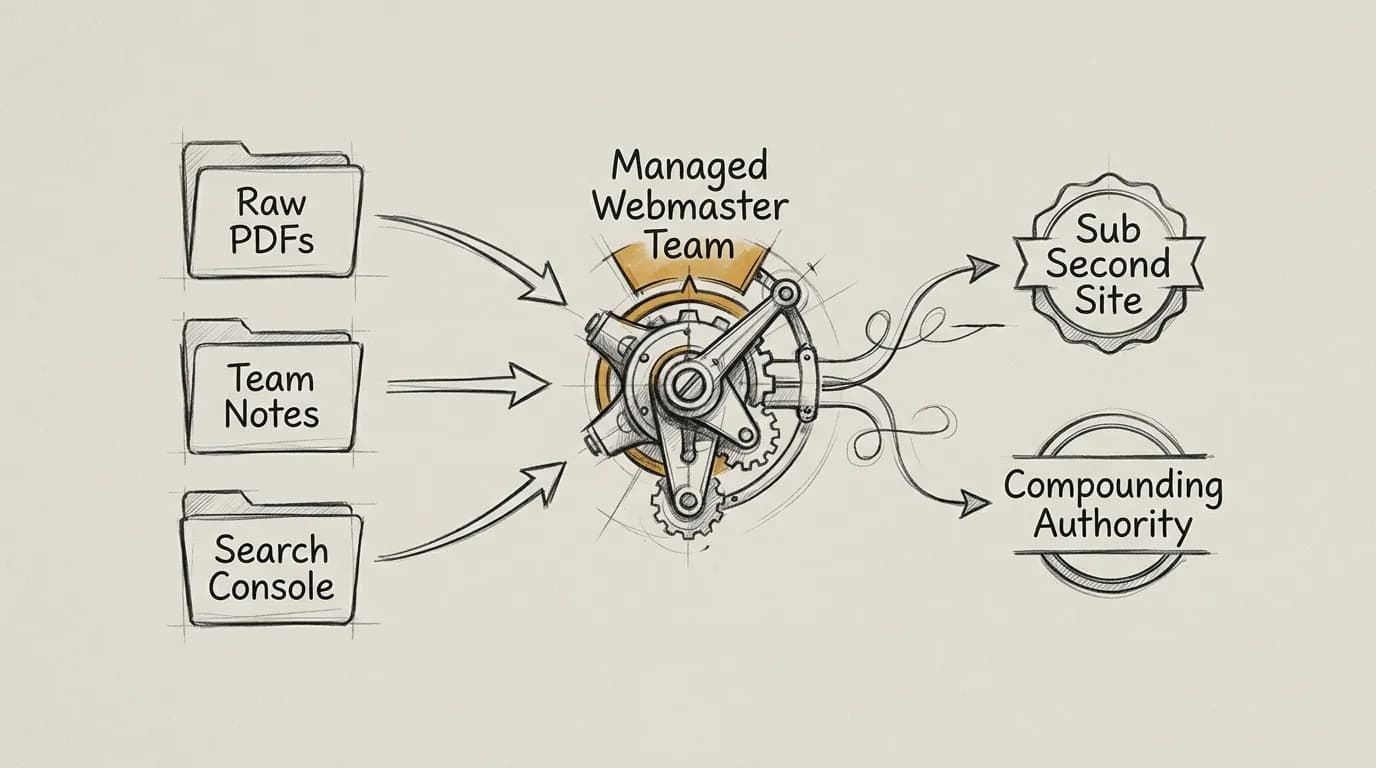
At Simple Intake, we handle the ongoing website and architecture updates depending on your package, so your practice stays genuinely alive online. We build for sub-second speed, set up localization if you serve bilingual communities, and turn your real practice focus into clear on-page SEO and authority content that answers client questions plainly.
Best of all, a real human team learns from your practice and scales the setup to match your stage and budget, whether you are a solo practitioner or a growing wellness group. If you want to compare ongoing managed options against DIY builders, see our breakdown of consulting website cost and managed providers. A quiet, outdated page makes a warm practice feel closed before a client ever reads your bio.
Simple Intake gives your practice a team that keeps your site fast and localized for new clients.
Three Practical Fixes to Turn Visitors Into Booked Sessions
You do not need a flashy redesign to double your inquiry-to-booking rate. Focus on three practical changes that respect a new client's energy:
- Ask three routing questions first: Save full medical and trauma histories for your secure EHR portal after booking. On your website, ask only what is needed to route the fit: main concern, preferred timeframe, and insurance or private pay [1].
- Build dedicated pages for each specialty: Give anxiety, couples counseling, sports rehab, or nutrition its own clear page answering who it helps and what the first session looks like [1][2].
- Automate the immediate acknowledgment: Let every inquiry know within seconds when they will hear back or offer direct booking into your EHR calendar, a shift shown to lift bookings by 28% across practices [1].
Clarity on your front page calms a nervous visitor faster than any stock photo ever could.
Let Simple Intake connect your specialty pages to booking without adding intake friction.